

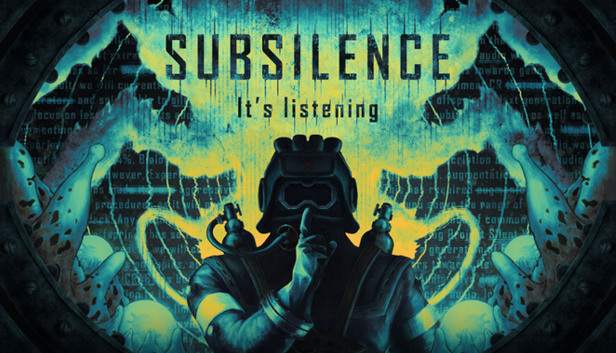
SUBSILENCE
Genre
Adventure Horror
Engine
Unreal Engine 5
Team Size
17
Role
Technical Game Designer
System Designer
Level Designer
PROJECT DESCRIPTION
Play as a spy sent on a solo VR mission, navigate an underwater bunker while escaping from a deadly predator that hunts by sound. Every breath, every step, and every action carries a risk. Use your tools, stay quiet, and outsmart the lurking threat. Remember, closing your eyes won’t save you!


INTRODUCTION
Subsilence is my end of studies project. We were tasked to create a VR horror game. The initial pitch was a cooperative game with 2 players. We faced several issues while designing the game in multiplayer. Eventually, I suggested the team to focus on audio mechanics to enhance immersion and the feeling of stealth instead of the multiplayer aspect. We agreed on this core concept and designed the whole game around audio.
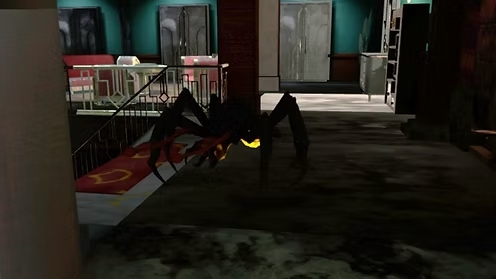
In the game, explore an underwater bunker where lives an unknown monster that was created there. It is blind and only reacts to sounds. Most actions from the player make sound which can attract it. Players need to outsmart it and find ways to avoid it: throwing objects, moving slowly and hiding are each viables solutions!
AI DESIGN
My major task on this project was to design the AI so that it correctly reacts to audio.
It was a complex task as I never worked on such a complex AI as a designer in the past. It had to react correctly to the player, but at the same time not being too punishing, all of that while being scary.
It took us several iterations to come to a functionnal design that we are proud of. We eventually went for a more minimalistic approach, with less systems. While not as effective as it could be with more work on it, it correctly does what we expect it to do in most of the situations. This decision was also helped by the fact that we reduced the size of the level compared to our initial intentions, because of the VR environment.
Another aspect of the AI Design was the NavMesh management. I worked closely with the programmer in charge of the AI and the artists to create meshes and collisions that allow the creature to easily move around in the shelter so that players cannot outrun it.
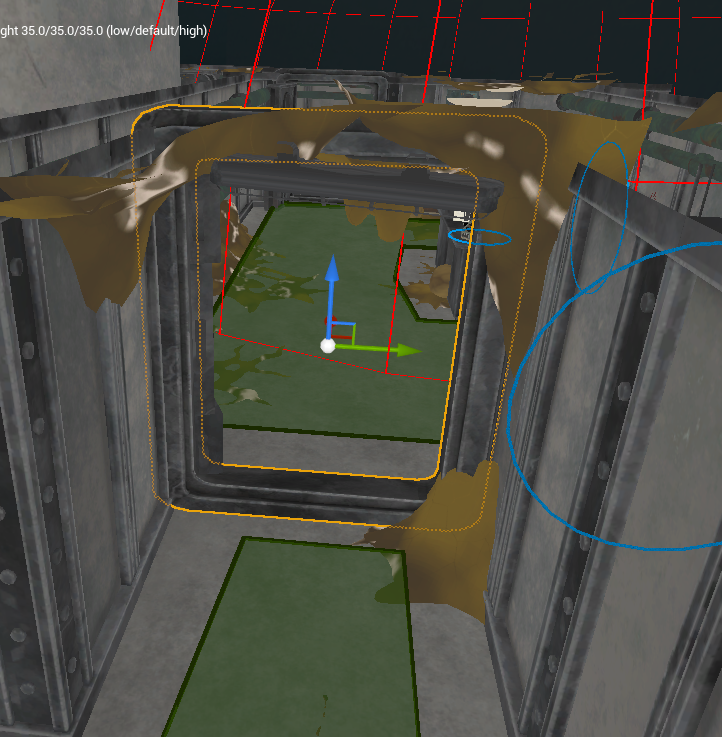
Here’s an example of my work. The green area represents the NavMesh the creature can move in. I modified the collisions and navmesh areas to remove these NavMesh cuts.
SYSTEM DESIGN
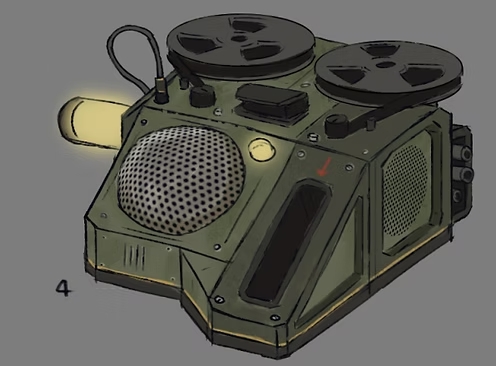
Once the focus on audio was decided, we knew the game mechanics would need to fit this approach. I suggested a few mechanics such as tape readers and drawers.
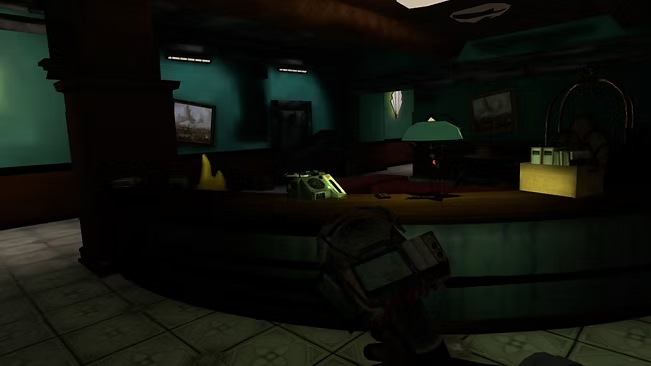
Tape readers allow players to find essential clues to progress, as progression in this game is audio-driven. Players need to first find cassettes in the level to play them on a tape readers. However, when playing a tape, the creature is instantly attracted to your location, which means you need to hide from it as the cassette is being played.
Drawers play a similar role, as this is where we hide the cassettes. When opening a drawer, you might attract the creature if it is too close from you!
Finally, the last mechanic we added to the game is an audio amplifier. Similarly to other horror games, ours feature a tool that allow you to listen to distant sounds.
This feature adds the ability to players to resolve some situations and detect the creature in the distance to better escape from it. It also enhances VR interactions in the game alongside drawers and levers.
LEVEL EVENTS
On the Level Design side, I was in charge of the various events that happen throughout the player experience. These moments were added with the intention of bringing life to the basement and make it feel real.
These events are various, such as a door opening/closing, an elevator crashing down, the creature exiting a vent and pushing objects from the environment, an egg falling down etc.
Here are some in-engine work in progress of the creature spawn and the elevator crashing down.
PLAYTESTS
As the project was progressing, we eventually ran some playtests. I took charge of organizing with the producers and collecting data and feedback from it.
IFrom the playtests, I created a playtest feedback document in which I presented the team the results and what topics we should focus on for the next milestones.
This document also helped the design team to better understand the behavior of players in VR as it is a platform we never worked on in the past.
POST MORTEM
This project is the biggest one I worked on as a game designer. It was a difficult project as it was the first VR game I worked on and I had to learn how to design them during the production. Overall, I learned many things about how to design a game while learning about VR game design. Cutting the multiplayer was a good decision that came a bit too late. I think with a bit more work the game could turn out as a great game in the VR market.
As Subsilence is also my first horror game, I discovered what are the different challenges of this game genre, such as how to create stressful/terrifying situations, manage the pacing of the player’s emotions…
Also, horror games become enjoyable only at the moment you start to add game feel elements as it’s what people want to see from these games. This makes it hard to playtest early in the production as you can’t test the horror elements on players when it’s still in prototype.
What I learned from this project:
– VR game design is completely different from other platforms
– Horror games is a genre that is really hit or miss
– Managing a rework of a game’s core concept is tricky after a difficult project start
– Adventure games require a lot of work on guidance
DOCUMENTS
Subsilence
Game Concept Document
Subsilence
AI Behavior Document
Walkthrough